Belgium’s Flemish public broadcaster VRT has stated that it is unlikely to send an artist to the Eurovision Song Contest 2027 unless the European Broadcasting Union holds a direct vote among its members on whether Israel should be permitted to continue competing in the contest.
VRT spokesperson Yasmine Van der Borght made the statement ahead of the grand final in Vienna on 17 May 2026, saying the broadcaster had received no signal from the EBU during the week that its concerns were being heard.
Today, the chances are slim that VRT will send an artist next year. We expect the EBU to make a clear statement against war and violence and for respect for human rights. Therefore, we are asking for a clear framework for participation, an open debate, and a direct vote among EBU members. So far, we have received an insufficient response to this. Even during the semi-finals this week, we received no signal that the EBU is hearing our concerns.
Yasmine Van der Borght, VRT Spokesperson
VRT stated that its concerns extend beyond Israel’s participation specifically and relate to the absence of an objective framework defining the conditions under which a broadcaster is or is not eligible to compete in the contest.
An objective framework like other international organisations have: what are the conditions for a country to participate, and what are not conditions? That is currently lacking.
Yasmine Van der Borght, VRT Spokesperson
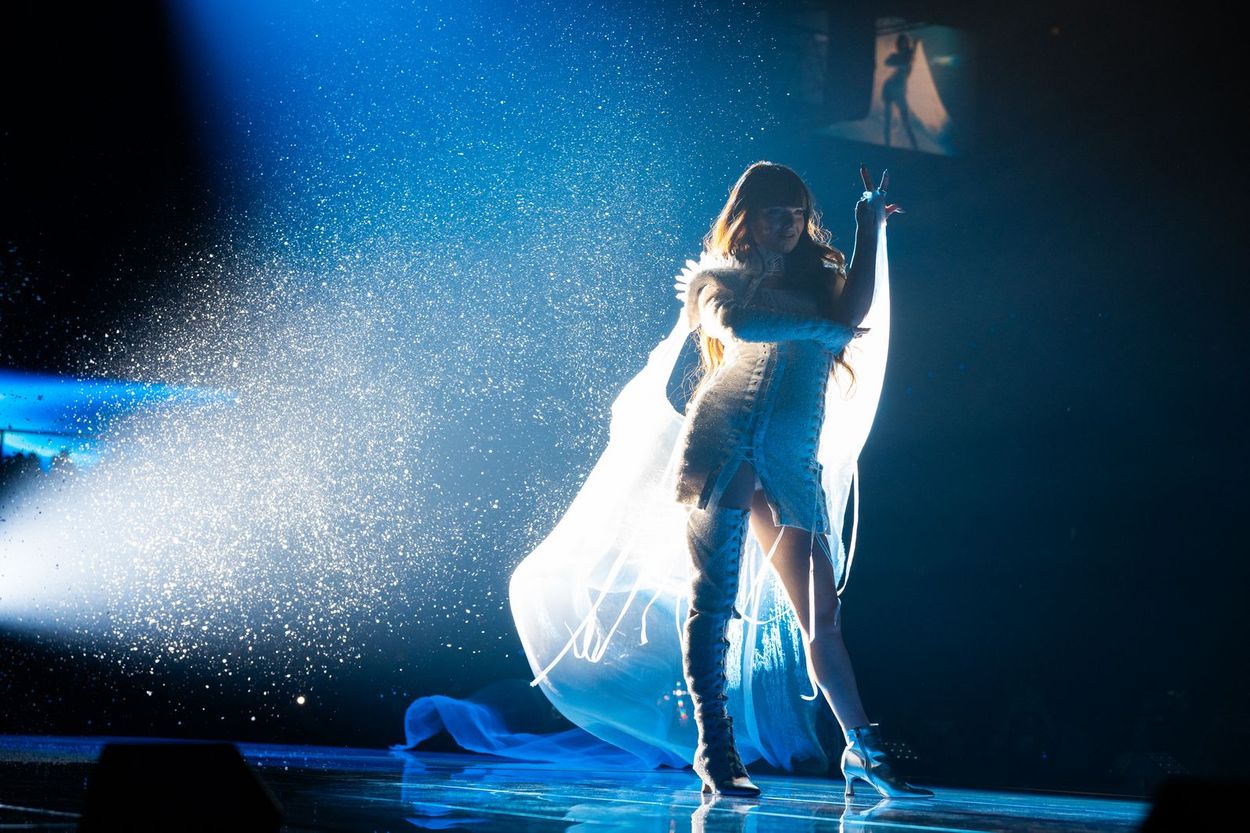
Belgium’s Eurovision participation alternates annually between VRT and RTBF, the country’s French-language public broadcaster. RTBF held the mandate for 2026 and sent ESSYLA to Vienna with “Dancing on the Ice”, finishing 21st with 36 points. VRT’s turn would come in 2027.
In December 2025, an EBU General Assembly vote passed rule changes, including a reduction in the maximum number of votes a viewer can cast, and the return of professional juries to the semi-finals, by 738 votes to 264. Because those rule changes were passed, a separate vote on Israel’s participation was not held. Following that vote, VRT released a statement saying it regretted that the EBU was “not doing more to restore the unifying nature of the song contest.”
During the 2026 contest, VRT did not send a commentary or content team to Vienna. Its commentator Peter Van de Veire covered the semi-finals remotely from VRT’s Brussels studios. Trade unions at both VRT and RTBF had previously placed protest figures in their shared building on Reyerslaan, carrying the message “Boycott Eurovision.” Belgian lawmakers from the PTB and Ecolo parties also urged both broadcasters not to participate in the 2026 contest.
The EBU has not publicly responded to VRT’s latest statement. VRT said it intends to discuss the matter with other broadcasters.
Naturally, we want to discuss this with other broadcasters. But if the EBU’s position does not change, the chances are slim that VRT will send an artist next year. – Yasmine Van der Borght, VRT Spokesperson