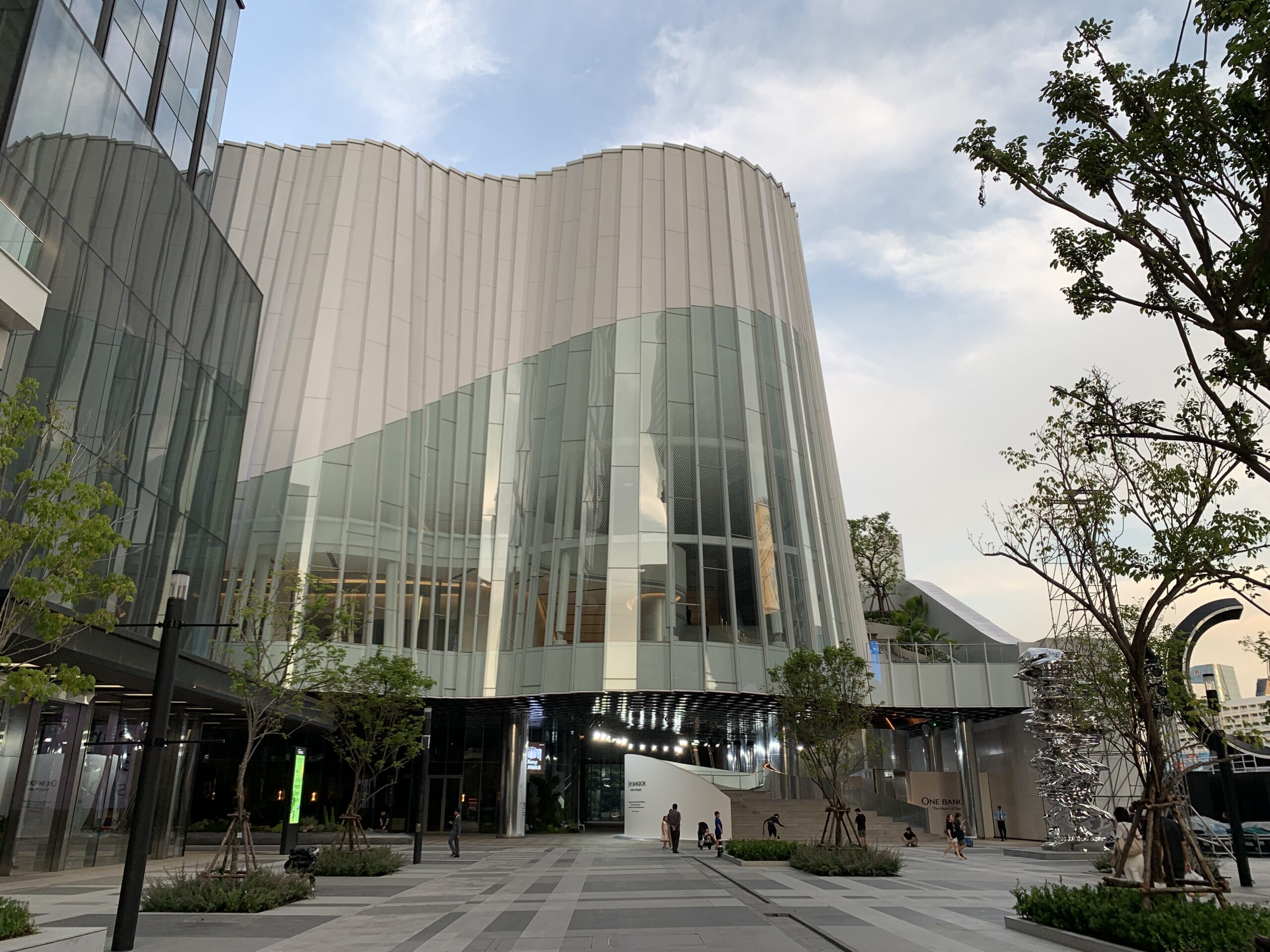
With just 23 days to go before the first Eurovision Song Contest Asia, the Bangkok show has reportedly lost almost a quarter of its budget and its international crew.
The first Eurovision Song Contest Asia was budgeted at about $4.5m, already a modest sum for a live international television final with 11 competing countries. Aftonbladet, the Swedish tabloid, reported on Thursday that $1m of it, roughly £760,000, has now been cut, with the approval of the European Broadcasting Union and less than four weeks before the grand final at One Bangkok Forum on 14 November.
The paper’s sources describe a second decision that came with the cut. The international specialists hired to design staging, lighting, sound, graphics and television production have, in effect, been told to stay at home. Voxovation, the Swedish company producing the show under licence from the EBU, can no longer afford to fly them to Thailand and pay for their hotels, and they are being replaced by local Thai crew working with a much simpler technical set-up. One person with knowledge of the project questioned whether the show could go ahead as planned at all.
The EBU has not disputed either of these claims. Martin Green, director of the Eurovision Song Contest, said in a written statement that Asia had a strong tradition of hosting big events, that Voxovation was proud to be working with a large and experienced local team, and that the union was confident the budget suited the ambition of a first edition.
The story now mainly surrounds Eurovision Asia’s principal sponsor ZOOP. The social platform launched globally in April, runs on Hedera blockchain technology and is Eurovision Asia’s exclusive social partner, as well as the app through which viewers will cast their votes. It was also an official partner of the European contest in Vienna, where Green welcomed it as a sponsor. Its chief executive is RJ Phillips, a former OnlyFans executive who set up ZOOP in 2022 as a celebrity digital trading-card business with Tim Stokely, the founder of OnlyFans.
Aftonbladet reports that Phillips now controls a majority of Voxovation as well, and that Peter Settman, who stood down as CEO in August, is no longer a major shareholder. If that is correct, the same person stands behind the show’s producer, its main sponsor and the platform on which half of its result depends. Neither Phillips nor Voxovation has responded publicly to the report, and the EBU’s statement did not address ownership.
Our sources suggest that despite the budget cut and the international team being stripped back, the EBU has asked some key members of the international team to travel to Bangkok anyway, as there are concerns that the local team may not be able to match the production quality expected of a Eurovision event.
The EBU is keen for Eurovision Asia to be a success as it continues to work toward a global expansion of its format; however, with barely three weeks to go until the show, there are some doubts that it will even go ahead. In terms of other expansions of the brand, the American Song Contest in the United States was cancelled after just one edition. Meanwhile, Eurovision Canada and the Eurovision Latin America spin-offs were both announced by the EBU and Voxovation; ultimately, neither materialised.
It now seems likely that unless Voxovation can find more external investment, future international editions of the Eurovision Song Contest are unlikely to go ahead, despite defiance from many involved that Eurovision Asia will not be a one-off.
